Our Blog

St. Patrick's Day

March 15th, 2023

On March 17, everyone has a little Irish in them. St. Patrick’s Day is a joyous celebration of Irish heritage. The holiday originated as a commemoration of Saint Patrick, who brought Christianity to Ireland. The saint arrived in Ireland in 432 and earned the reputation of a champion of Irish Christianity. March 17th, the day of St. Patrick’s death, has been commemorated by the Irish for over 1,000 years. St. Patrick’s Day is still observed as a religious feast day by several Christian denominations, but it is better known in the public imagination as a rich celebration of Irish culture.

St. Patrick’s Day has been an official public holiday in Ireland since 1903. Each year, the Irish celebrate with a several-day festival that includes theater performances, music, fireworks, and festive parades. The celebration is also a public holiday in Northern Ireland, Montserrat, and Newfoundland and Labrador. In other parts of the world with heavy Irish populations, it is an unofficial celebration of Irish heritage. Parts of Great Britain, Canada, Argentina, South Korea, Switzerland, New Zealand, the United States, and Australia commemorate the holiday each year. Typical celebrations in these countries include drinking green beer, wearing green, eating traditional Irish foods, parades, and shamrock decorations.

Many people, Irish and non-Irish alike, take part in the “wearing of the green” on St. Patrick’s Day. In fact, the color originally associated with Saint Patrick was blue. His use of shamrocks to explain the Holy Trinity to the Irish made the green clover emblematic of the holiday, leading to the traditional green attire worn by thousands on St. Patrick’s Day. Other little-known facts about St. Patrick’s Day include the following:

  • Each year, the United States and Ireland face off in a rugby competition called the “St. Patrick’s Day Test.”
  • Montreal celebrates the holiday with an annual parade, which has been held each year since 1824. The Montreal city flag even features a shamrock in its corner, as a nod to its Irish heritage.
  • The Guinness World Records named St. Patrick’s Day the “Friendliest Day of the Year.”
  • Along with Valentine’s Day, St. Patrick’s Day is one of the most widely celebrated saint’s day in the world.

No matter your cultural heritage, St. Patrick’s Day is a great time to let loose and celebrate your inner Irish-ness! Don your greenest attire and exclaim “Erin go Bragh!” (Ireland forever!) to everyone you meet. From Dr. Brent Moody and Dr. Somer Heim - have a great St. Paddy’s day!

The Safety of Dental X-Rays

March 8th, 2023

An article was released to the public stating that dental X-rays contribute to a type of brain cancer. After reading an article like this, your first thought may be to avoid dental X-rays, but you may want to hold off on that quick judgment. As with any treatment we offer at Pediatric Dental Specialists of Central Oklahoma, education is your most valuable tool in deciding what is best for you.

How often dental X-rays are taken is based on risk for infection, physical symptoms, and clinical findings. The American Dental Association (ADA) is a governing body over the dental profession. The ADA states, “ . . . healthy adults receive routine mouth X-rays every two to three years. Dental X-rays are recommended every one to two years for children and every 1.5 to three years for teens. Children often require more X-rays than adults because of their developing teeth and jaws and increased likelihood for cavities.”

A "caries risk category" often determines how often dental X-rays are taken. The most recent documented resource to determine a caries risk is Caries Management by Risk Assessment (CAMBRA). This was adopted by the ADA and is used by dental professionals giving interval recommendations for X-rays.

With knowledge of your risk for dental infection, you will be informed by Dr. Brent Moody and Dr. Somer Heim of the interval at which dental X-rays should be taken. You can rest assured that the standards published by the ADA have been researched extensively and are there to protect your personal health and safety.

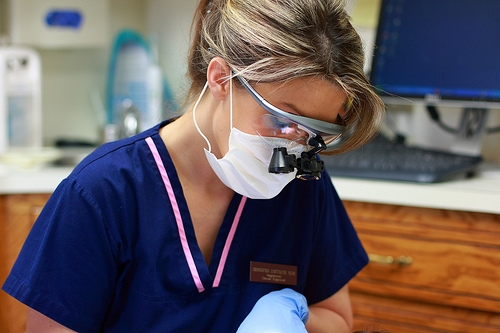
Dental X-rays are most commonly digital, which significantly reduces exposure. There is more radiation exposure from the sun or in an airplane than in a dental X-ray. It is common practice to use a lead apron with a thyroid collar for protection during X-ray exposure.

Having a cavity means having an active, potentially harmful infection. Diagnosing such infection with minimal exposure through digital dental X-rays at our Oklahoma City office does more good than harm.

Good Nutrition Leads to Healthy Mouths

March 1st, 2023

At Pediatric Dental Specialists of Central Oklahoma, we know the most common oral health diseases are tooth decay and periodontal disease (or gum disease), and both are among the easiest to prevent. One of the most common ways we recommend to boost your oral health is by improving your diet, because you (and your mouth) truly are what you eat. A healthy diet can lead to a healthy mouth and body, while an unhealthy diet can lead to the exact opposite.

The Role Nutrition Plays

While diet is not the only factor that leads to periodontal disease, studies suggest the disease may be more severe among patients whose diets lack essential nutrients. Poor diets will generally lead to a weaker immune system, leaving your body susceptible to all kinds of ailments, including periodontal disease.

A Well-Balanced Approach

There is no “magic” diet that we can recommend to improve your oral health, but the most important thing is to seek a well-balanced approach in your eating. While fad diets that emphasize one food group over another may help you lose weight in the short-term, they probably will not provide all the nutrients your body needs in the long run.

Meals should include a balance of lean meats or other healthy protein sources, colorful fruits and vegetables, whole grains, low-fat dairy, and healthy fats. Foods containing substantial amounts of sugar and salt should be consumed in moderation.

Soda and Sugar: A Dangerous Duo

Millions of gallons of soda are consumed every day in America, but sipping a cold soft drink can be very harmful to your teeth. Many of these beverages wear down the enamel that protects the teeth, which weakens and even destroys them over time. The American Beverage Association estimates that soft drinks account for almost 30 percent of all drink consumption in the U.S., averaging an annual total of about 50 gallons per person (up from only 20 gallons in the 1970s). For healthy teeth and a healthy body overall, try to limit your soda intake.

Sugar is another ubiquitous treat in our daily lives. When we eat sugar, naturally occurring bacteria in our mouths convert it to acids that attack tooth enamel. Consuming too much sugar can swiftly lead to tooth decay, cavities, and gum diseases like gingivitis. Most people do not even realize how much sugar they consume each day. It’s important to limit your daily sugar intake by reading the labels of all the food you eat, and sticking with natural food sources that are low in sugar, especially ones that minimize added sugar, such as fruits and vegetables.

If you have questions about your diet and how it may be affecting your oral health, talk to Dr. Brent Moody and Dr. Somer Heim about it. See you soon!

Is dairy crucial to my child's oral health?

February 22nd, 2023

Healthy eating, combined with regular physical activity, plays a vital role in your child’s health and well-being. Dairy foods are naturally nutritious, packed with ten essential nutrients that help your child feel good for life. But did you know that dairy is also great for your child’s dental health? Our team at Pediatric Dental Specialists of Central Oklahoma will tell you that, in addition to providing large amounts of much-needed calcium, dairy products also help fight cavities! Dairy products have a specific role to play in dental health as they contain a unique combination of special anti-decay nutrients such as calcium, phosphorus, and the protein, casein. Cheese is especially useful, as eating a small piece of cheese after consuming sugary foods or drinks can help protect teeth and reduce the risk of tooth decay.

If you’d like to know more about the importance of dairy products in your child’s diet, or about any aspect of your child’s dental health, feel free to ask Dr. Brent Moody and Dr. Somer Heim at your next appointment!